3/10 missions30%
Mission 08Advanced20m learning time

Shrinkage

Learn why castings shrink and how risers compensate for it.

Section 1

Learning Objectives

1

Describe the three stages of shrinkage in a casting.

2

Explain how risers prevent shrinkage porosity.

3

Relate shrinkage allowance to pattern design.

Section 2

Theory

Three stages of shrinkage

Metal shrinks in three stages: liquid shrinkage as it cools while still molten, solidification shrinkage as it changes from liquid to solid, and solid shrinkage as the solid casting cools to room temperature.

If solidification shrinkage is not fed, it leaves internal voids known as shrinkage cavities.
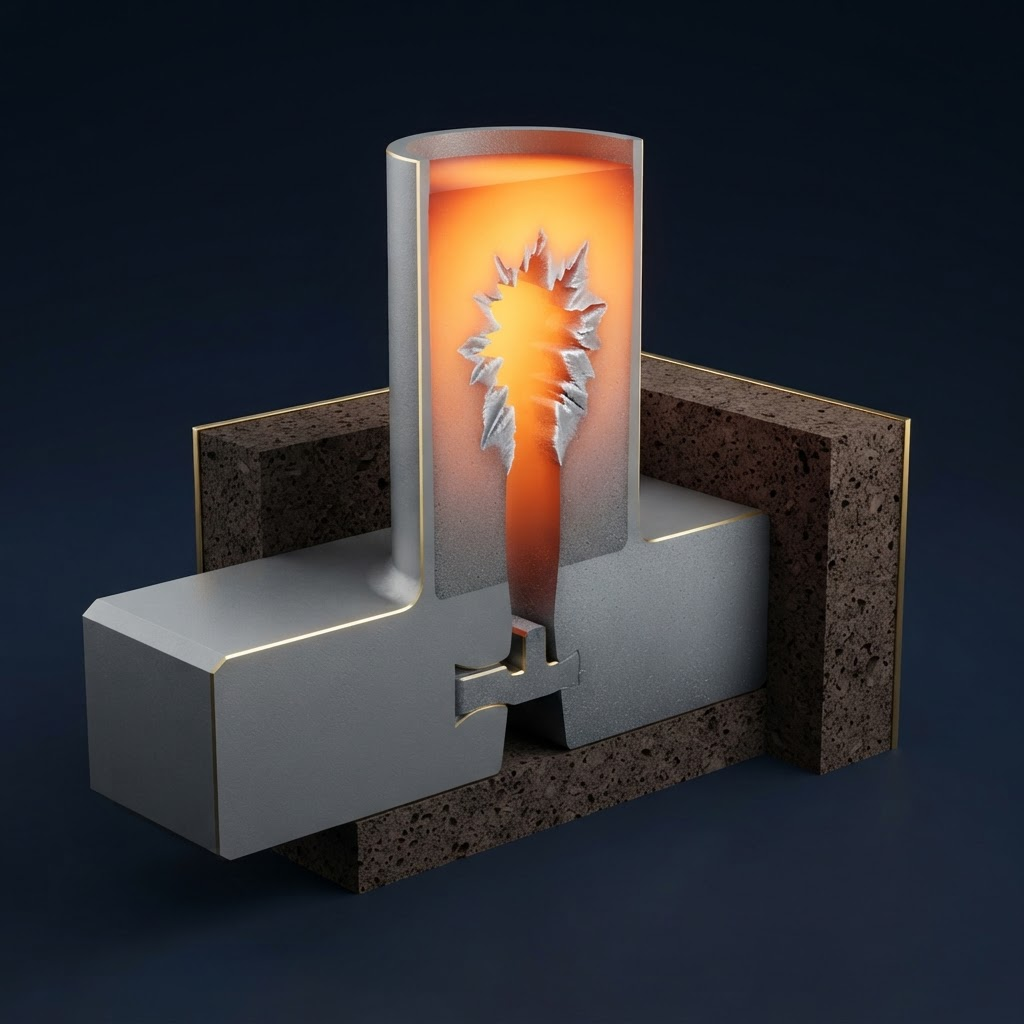
A riser feeding a thick section, with a shrinkage cavity forming inside the riser.

The role of risers and allowances

Risers are sized so they solidify after the casting, feeding liquid metal to the shrinking region. Pattern makers also add a shrinkage allowance so the final solid part reaches the correct dimensions.

Section 3

Interactive Animation

Interactive animation will appear here.

Animated visualizations for this mission are being crafted and will be embedded in this space.

Section 4

Mini Activity

Interactive activity coming in Sprint 3.

Hands-on drag-and-drop and simulation activities will be unlocked here in the next sprint.

Section 5

Quick Knowledge Check

Answer all 5 questions correctly to unlock the next mission.

0/5 correct
1

How many stages of shrinkage are there?

2

Solidification shrinkage that is not fed causes:

3

A riser prevents shrinkage porosity by:

4

A riser should solidify:

5

A shrinkage allowance is added to the: