3/10 missions30%
Mission 04Intermediate18m learning time

Gating System

Understand sprue, runner and gate design for clean metal flow.

Section 1

Learning Objectives

1

Identify the components of a gating system.

2

Explain how gating controls the speed and cleanliness of metal flow.

3

Describe how poor gating leads to turbulence and defects.

4

Relate gate design to fill time and casting quality.

Section 2

Theory

Directing the flow

The gating system is the network of channels that carries molten metal from the pouring basin into the mould cavity. It usually consists of a pouring basin, a tapered sprue, one or more runners, and ingates that connect to the cavity.

Good gating delivers metal smoothly and at a controlled rate, minimising turbulence that can trap air and oxides.
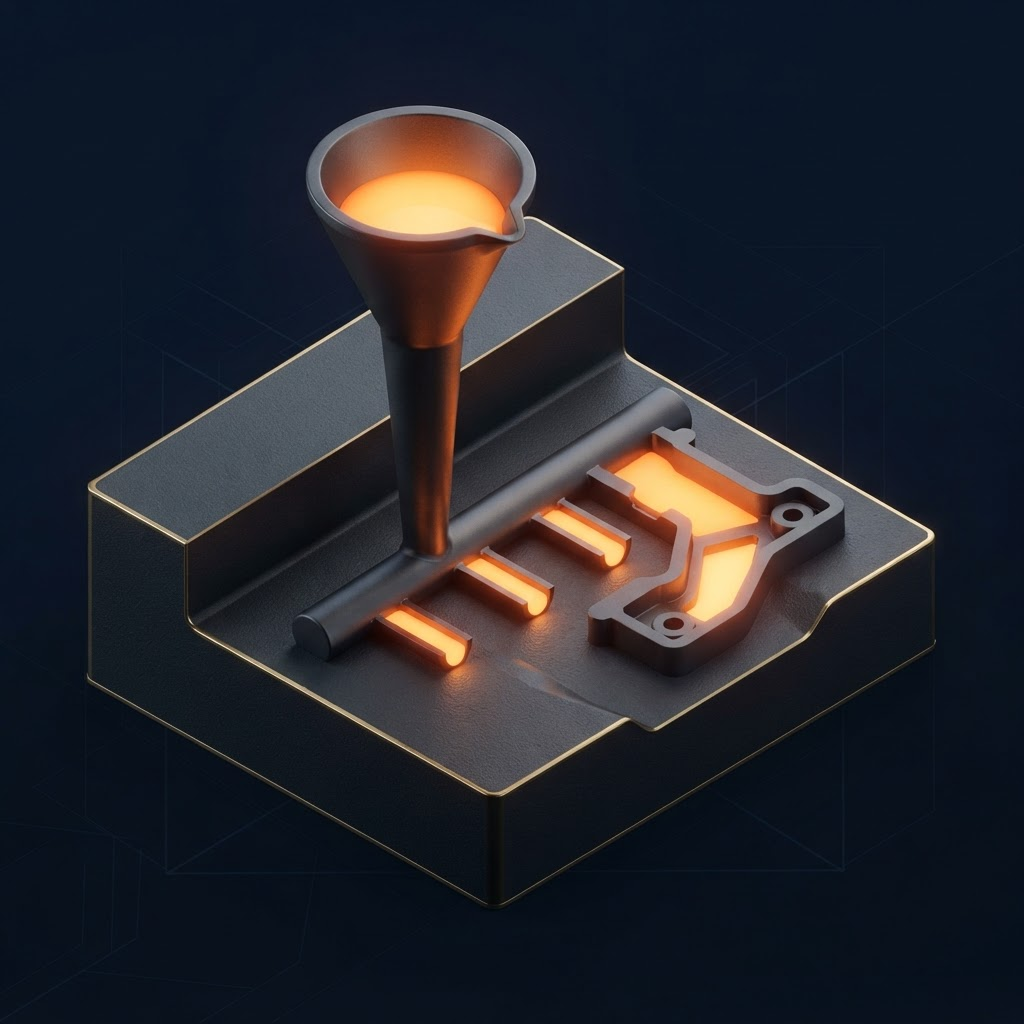
A pouring basin feeding a tapered sprue, runner and ingates into the cavity.

Why gating design matters

If the sprue is too wide or the metal falls too fast, the flow becomes turbulent and draws in gas, producing porosity and inclusions. A well-tapered sprue keeps the channel full and the flow laminar.

You will experiment with these parameters directly in the Gating Simulator in a later sprint.

Section 3

Interactive Animation

Interactive animation will appear here.

Animated visualizations for this mission are being crafted and will be embedded in this space.

Section 4

Mini Activity

Interactive activity coming in Sprint 3.

Hands-on drag-and-drop and simulation activities will be unlocked here in the next sprint.

Section 5

Quick Knowledge Check

Answer all 5 questions correctly to unlock the next mission.

0/5 correct
1

What is the main job of the gating system?

2

Why is the sprue tapered?

3

Turbulent flow can cause:

4

Which component connects the runner to the cavity?

5

A pouring basin helps by: